During the work of the State Commission for the Full Compensation of Victims of Political Repression, we were on a business trip to the village of Badamsha, Kargaly district, Aktobe region. Together with Zhibek Osmangaliyevna Abdullina, chairman of the patriotic and educational club "Rukhaniyat" of the Aktobe regional historical and local history museum, we met and talked with Svetlana Viktorovna Korotkova, a resident of the village of Badamsha.
Svetlana Viktorovna began her story by standing at the cemetery where deported representatives of the German nationality are buried: I would like to start my story with the history of our village. In 1931, geologists found nickel here. The nickel reserves were very large. However, since the need was small, it was not mined.
In 1941, the Great Patriotic War began, and the need to extract nickel ore arose, especially in defense conditions. Germans who had been repressed from Ukraine, and later from the city of Gdansk, were forcibly relocated here as "dangerous, unreliable elements." I didn’t know why, in those years the Soviet government considered that the Germans in the Soviet Union “could turn to fascism.” But I had never heard or seen such a situation. People lived in peace.
In 1941, men were rounded up and sent to mine nickel. These people did a lot of work. The first echelon that arrived here brought 2,700 people. Their wives and children were deported to Siberia. I had heard from my grandmother and mother that many people had died. My grandmother was of Austrian German descent. My grandmother is no longer there. She lies in this cemetery. My mother is there.
I also heard about the deaths of many people from Nikolai Vasilievich Krieger, who lies in this cemetery. When he was 17 years old, he came across camp No. 24 here. Elena Petrovna Eremina, who taught history at school, was the first to research the German people who were forcibly resettled here. He determined the number of the camp based on documents found in the Aktobe archive.
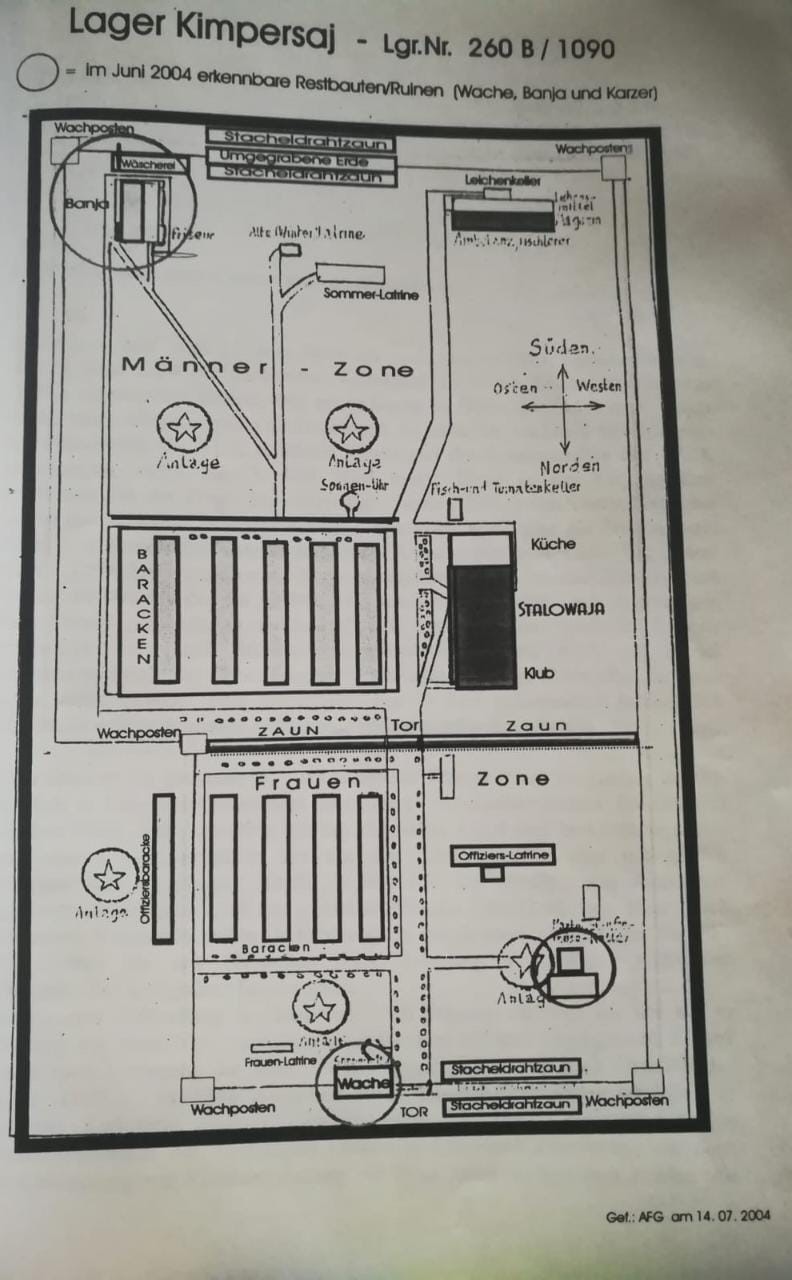
Many Germans living in our village had emigrated to Germany. They found out from the archive there the location of our village, the former camp, these quarries, and found out that the number of the camp in the German archive was completely different. The picture below shows the location of the camp. However, we call the camp by the number 24 that we know.
On November 7, 2,700 people of German nationality were brought here by horses and sledges from Kempirsay, about 3 kilometers away. In the evening, they were left in the desert without any shelter. We come here every year on November 7, bowing to their spirits and remembering them with respect.
It snowed that day. Those who remained in the desert made a hole in the snow, 3-4 people at a time, and spent the night there. In the morning, tents for 100 people were brought. It was very cold inside the tents. People separated the pipes, burned grass and dung under them, heated them, and warmed themselves a little with the heat of the pipes. People slept huddled together to keep warm.
In the first years, people lived in bunkers dug into the ground. This is the place of those bunkers. One bunker has been preserved. Then they built barracks themselves. At first, they built five barracks. One of them was a canteen. Part of it was a chemical laboratory. 3 kilometers south of here, nickel was mined. Iron was produced later.
In the first winter, 1,000 people died from cold, frost, and hunger. The ground was so frozen that it was impossible to bury people. People were hungry because they did not eat properly. People were dying from hard work and hunger. Since the number of people decreased, a new batch of people was brought in (700 people). The rest of the previous arrivals were distributed to the districts and sent to work on the construction of the railway.
At first, 6 barracks (one of which was a canteen) were built. All of them were fenced. Today you can see the place of that fence. The barracks were surrounded by chain-link fences, guarded by dogs and armed guards.
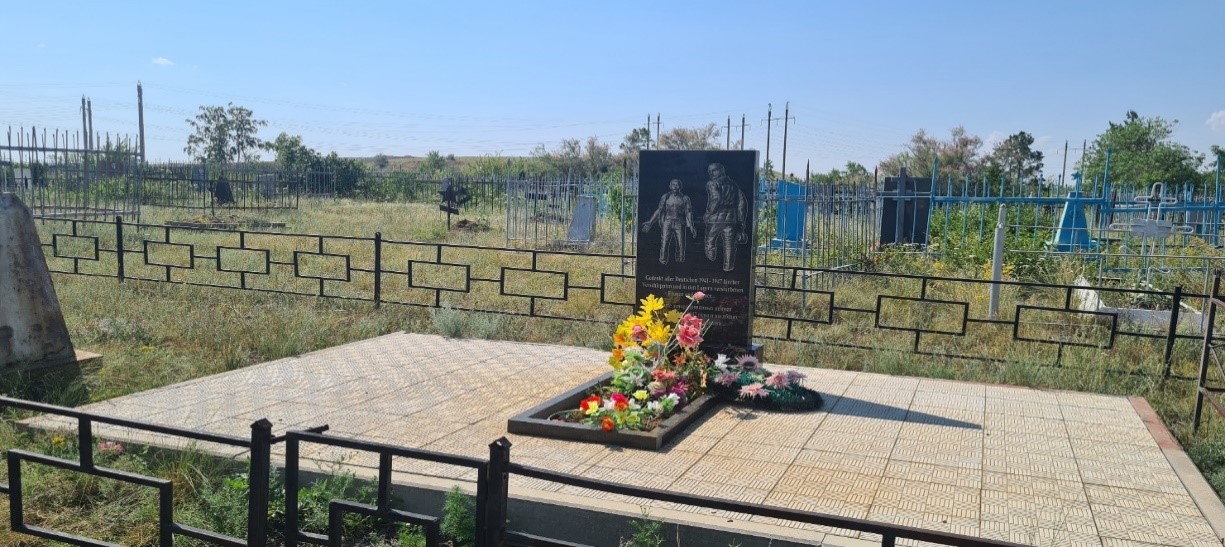
The Germans obeyed the law without fail. They did not break the law. They performed unbearable work in the quarry. Therefore, since they could not bury the dead, they dug a large pit and put the dead in it. Only in the spring, when the sun warmed up and it was possible to dig the ground, they were buried underground. However, since the bodies of people stuck together and froze, there were times when they were taken out with an excavator and reburied.
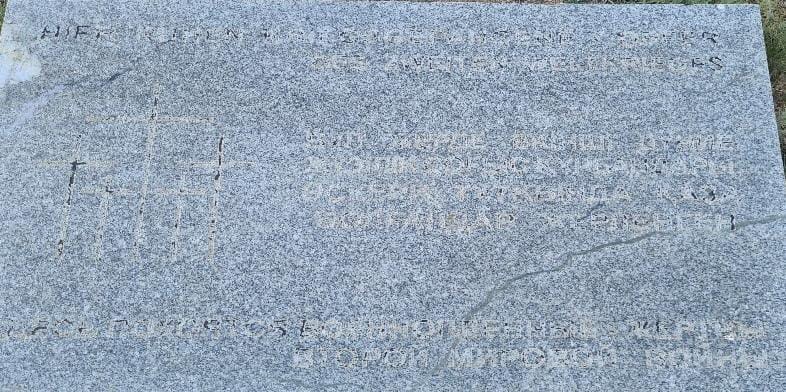
A common grave was dug in these places, where the bodies of the dead were temporarily buried. The pictures below show the signs and monuments that were placed there.
Unfortunately, we do not have lists of those who were reburied here. We cannot find a list of those who arrived in the first echelon.
The work was very hard. An excavator was only put into operation in 1942. Four men worked on the excavator. According to Krieger Nikolai Vasilievich, the excavator often broke down because the ground was hard and icy. It broke after 2 meters, and people had to do the work of the excavator with their hands. Only later did the machine and excavator work go back to normal.
After the war years, the state farm was revived. Cattle, pigs, and later horses were raised. Cabbage, potatoes, and carrots were grown for the residents.
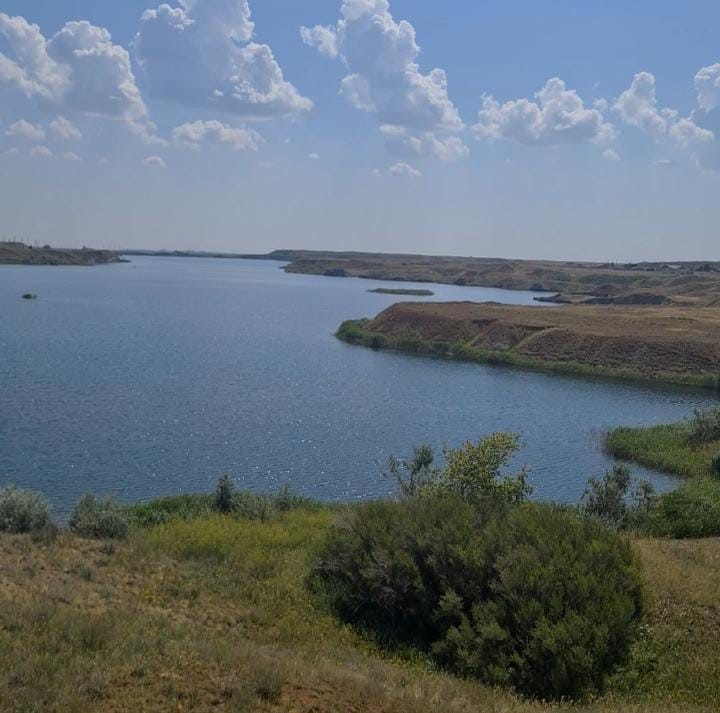
Most of the people who grew up in this village remained in their native places. At the place where the mine was dug, there was a pit about 3 meters deep, into which water from springs was collected. The picture below shows the quarry water.
Informant: Svetlana Viktorovna Korotkova. Kargaly district. Badamsha village. 2023.
The material was prepared for publication by: Kuralai Kuandykovna Sarsembina, Astana branch of the Sh. Ualikhanov Institute of History and Ethnology, candidate of historical sciences.