Since 1966, I have been studying the local population, since the population biological history of our nation is well preserved in rural areas.
I have come to the conclusion that the Kazakhs are a unique ethnic group, which in terms of anthropological characteristics does not belong to any of the peoples living in Eurasia.
There are very few people in the world who are created with such uniqueness. Because our ancestors went through individual stages of development, which were unique in their homeland.
The real history is in the human skeleton. The archival data that we are currently studying is worthless compared to this. Because they are all written subjectively. The genetic data on the human race is not in any archive fund in the world. Because it is preserved only in the person himself. After death, it is preserved in his bones, during his life in a strand of hair, in a drop of blood. We know that this is the secret of the reason why our ancestors respected the mausoleum and cemetery.
Leading scientists have long used anthropological methodology in the study of social phenomena. The object of research according to this methodology is a person, his fate, life, natural inalienable rights. This method allows us to objectively determine all the misfortunes that befell the individual (person), including political repression against a person and a citizen.
On November 24, 2020, by Presidential Decree, the State Commission for the Full Acquittal of Victims of Political Repression was established, which set itself the task of restoring historical justice, that is, fully advocating for the victims of repression and victims from a legal, political, moral, etc. perspective, and carried out a lot of work. This commission began research using a fundamental, anthropological methodology for the first time in our country. It aimed to comprehensively study what tragedy the Bolshevik-communist regime brought to every Kazakh (citizen of Kazakhstan), violated their natural national rights, and subjected them to political repression for a long time, and achieved significant results.
On May 31, 2021, on the occasion of the Day of Remembrance of Victims of Political Repression and Famine, President Kassym-Jomart Tokayev said: “The commission must restore historical justice in relation to Kazakhstanis who suffered from leftist policies. This is not only the task of the state, but also the duty of the entire society. "We will do everything to learn from history and ensure that such a tragedy never happens again," he explained.
In 2020–2023, under the leadership of Krymbek Kosherbayev and Yerlan Karin, the chairmen of the State Commission, a multi-level, large-scale work was carried out.
We are pleased that this commission, first of all, was able to provide qualified researchers with access to archival data on political repression and turn fresh data into the subject of scientific research.
The materials of the State Commission, which was established with the aim of fully exonerating the victims of political repression, were published in a 72-volume collection. The State Commission laid the foundation for the exoneration of more than 300 thousand victims and victims. "Egemen Qazaqstan", "Kazakhstanskaya Pravda" and other publications, social networks wrote that scientists who actively worked in the State Commission wrote that events and "conceptions" that were not objectively investigated and distorted during the Soviet era were studied using a new methodology and scientific international standards. However, there are still many issues to be studied.
Thanks to the interest and desire of the public and scientists, the Government of the country has allocated project-specific funds for 3 years for further fundamental scientific research of the conclusions of the state commission, new categories/subcategories of victims and victims of the policies and experiments of the communist regime. This is very important. But how ready are scientists, universities, and scientific institutions for this research right now? True, the Project Office, created to ensure the comprehensive work of the State Commission for the Full Compensation of Victims and Sufferers of Repression, has modern methodologies, great documentary and scientific potential.
The Project Office, headed by lawyer-scientist Sabyr Kasymov, is planning for the first time a fundamental, comprehensive study of the purpose, reasons, and consequences of the forcible implementation of the “Little October” program against the people. Scientists have been identifying and studying various political campaigns within the framework of this program to achieve a very significant goal. One of them is a huge state campaign that affected the fate of thousands, even millions of our compatriots. Tens of thousands, hundreds of thousands of lives have been lost. And how many more have been injured, humiliated, imprisoned and tortured without cause, and forced to flee the country!
We must determine the number of victims and victims, of those who died of hunger, as fully as possible. Each campaign should be studied by separate scientific research groups. It is also very important to study this from the point of view of anthropology. This is necessary for the biological history of the Kazakh people.
In our opinion, honest and responsible scientists who value human values should help the Project Office work tirelessly. This is the future of science. Without exposing the lies of the Bolsheviks and the Soviet party, the artificial obstacles of the time, we cannot modernize public science in our country, we will delay its raising to the international level.
But will the efforts of the State Commission Project Office be enough to carry out such a huge task? Will the leaders of science and education think about this problem? Can we fully study the archive that the former communist authorities deliberately closed in order to forget the causes and circumstances of the “Kazakh tragedy” in the world? How can we encourage scientists interested in this fundamental work to engage in free science? Will the plan to open a special scientific research center or institute that would fundamentally study our national tragedy be implemented?
The terrible disaster that the Bolsheviks themselves called the “Little Kazan in Kazakhstan” during the reign of F. Goloshchekin (1925–1933) must be fully and systematically studied. This is a tragedy that every Kazakh family experienced. If we do not take stock of it, our national consciousness will not grow. The Kazakh worldview that “the dead are not satisfied, the living do not get rich” hints at this truth.
My mother died of famine in 1933. I am a child of more than three years old, and my relatives rescued me from the place where I was nursing my dead mother. My father went to Russia in search of food, and my mother endured this suffering in this way until he returned. I have never been in the party in my life. How do I join the party? My friends, many of whom are now deceased, used to ask: “Oh, you are now a professor, a doctor, a scientist, why don’t you join the party?” I would ask them: “Do you have a mother?” They say: “Yes.” “So, you starve your mother, then join the party,” I tell them. “How can I serve a system that deliberately starved my mother, more than 3 million of my people?” I say.
My grandfathers were middle-class people. Before Kurgan and Tyumen, Chelyabinsk and Troitsk were built, those places were summer pastures and winter pastures. When the Tobolsk border was drawn, the Russian government occupied our land and did not let my grandfathers return to their land.
I learned that I was Kazakh when I was five years old. People from the interior of Russia called Kazakhs “Kyrgyz”. Lenin himself, while granting autonomy, fixed the name of the country as “Kyrgyz ASSR”. He insulted our nation so much that he did not hesitate to call us “Kazakhs”. Our village is on the banks of the Tobolsk, only 200-300 meters from the river. As a child, we swam well in the water. We were very skilled at crossing a river that was 15–20 meters wide. We would swim out and lie on the sand on the other side, basking in the sun.
One day, 5-6 of us children were playing in the sand on the Russian side of the Tobol River, when two young men came out of the thicket and grabbed us, saying, “Oh, you Kirghiz,” and threw us into the river’s current. This was a huge current that could turn a large boat over. The elders of the village had taught us, both by telling us and by showing us, that when you get into such a current, you should not try to come back to the surface. Surfacing and coming out of the current is like risking your life. In that case, if you dive to the bottom of the water and try to go in another direction and not come out, it’s all in vain. We did so, and we survived the current. I was a 5-year-old child, and I heard them say that I had just died and that my nationality was “Kyrgyz.” However, my inner self, my mind, had been engraved in my mind since my childhood that my nationality, which my parents had instilled in me, was Kazakh.
We saw the humiliation during the war. Hungry, with shabby clothes, we were mercilessly forced to do manual labor at the age of 12–13. We were forced to carry grain across the river to the village mill. At that time, we didn’t put it in a cart, we even slept on foot at the end of the cart. Later, we got used to it. When we worked 16–17 hours, our bodies were exhausted and we had no food. We had such a hard time...
After the war, in 1947, I graduated from a seven-year school and was enrolled in a pedagogical college in Mendikara. I graduated in 1950 and entered the history faculty of the university in Almaty. I graduated in 1955. I worked as a teacher for a year. In 1956, I entered the Institute of History, Archeology and Ethnography of the Academy of Sciences as a junior research fellow, preparing for anthropology. In 1958, I underwent a three-month internship in anthropology on behalf of the institute. In the fall of that year, I was offered a place in postgraduate studies in the physical anthropology department at the Institute of Ethnography of the Academy of the Soviet Union, and I passed the exam with good marks. But the management of the institute in Moscow told me: “There are no indigenous Kazakh bones in Kazakhstan that you need for your dissertation.” The institute in Almaty was against this. At that time, a meeting of the presidents of the Republican Academy of Sciences was taking place in Moscow, and academician K. Satpayev came to it. Now I had to apply to the president of the Kazakh Academy of Sciences at a Moscow hotel. Kaneken accepted. I explained everything. Then he said: “You prepare for the expedition. We will give it to you in 3-4 days.” He sent me a message from the president saying: “You prepare for the expedition. We will give it to you in 3-4 days.” He allocated me 12 thousand rubles for 3 months. At that time, this money was worth 4 “Muscovites”. Thus, thanks to K. Satpayev, the path to anthropology was opened for the first time in Kazakhstan, and the path to writing about the 5 thousand-year biological history of the Kazakh people was opened...
I started with the Kazakh bones from the unclaimed graves of those who died of hunger in 1933. In 1958, I started collecting the bones of the past from the Shubartau district of the Semipalatinsk region. Because there were many people buried unclaimed during the famine years in this region. Next, we collected bones around Lake Karasor, where the famous Koyandy fair was held. These were also people who died of hunger. In this way, the bones of 300 people were collected.
It is important to accurately determine the number of victims of the "Little October in Kazakhstan" tragedy. We still record the number of victims of the famine in 1930-1933 differently. This is a shame for science.
In general, historical science loves accuracy, like mathematics. In general, the world of guesswork and speculation is alien to it. That is why the tragedy of the "Little October in Kazakhstan" must be systematically and fundamentally studied.
During the communist totalitarian regime, such a tragedy occurred only in Ukraine among the allied republics. And such events occurred at the world level. Developed countries have thoroughly studied such a tragedy and drawn conclusions. This should not be a burden to today's people. Each generation is responsible for its own history.
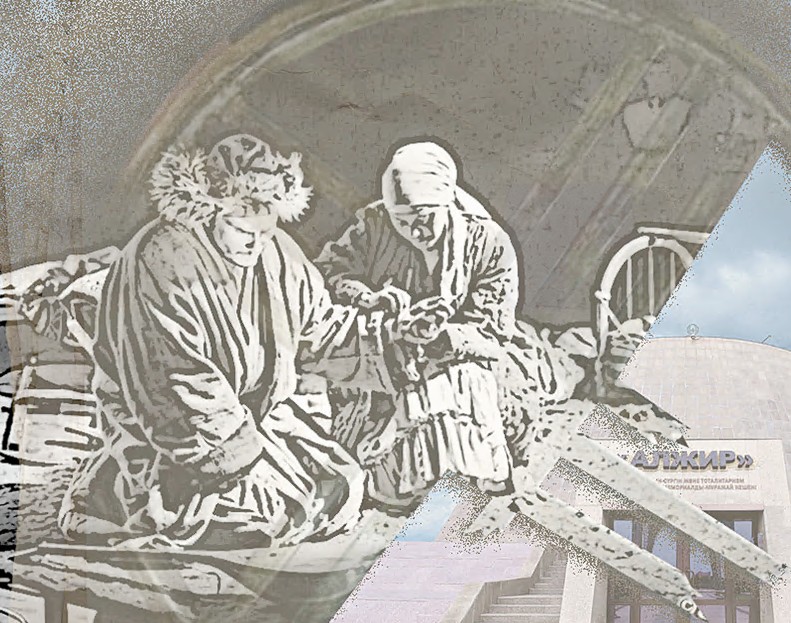
It is necessary to mark the burial places of those who died of hunger. We need a monument that commemorates every tragedy in our history. This will educate future generations to think and reflect. At least they will know and remember the history of the places they visit.
The communist regime persecuted not only people, but also science. The garden of anthropology did not bloom. The Russian anthropologists who helped me the most and gave me scientific advice were Georgy Debets, Yakov Roginsky, Viktor Bunak. The luminaries did not open their eyes to persecution throughout their lives, they even tasted prison.
In addition to historians, sociologists, cultural scientists, psychologists, anthropologists, philosophers, and lawyers should also actively participate in studying the consequences of the totalitarian system. Unfortunately, anthropology is not taught in universities in our country. This is a huge drawback for science. Despite the fact that it has been said and written many times, those responsible are reluctant to do so.
Only when the tragedy of the 1920s-1950s, including the "Little October" in Kazakhstan, is fully and systematically studied, historical consciousness will be purified and national consciousness will grow. Only through this, we will learn from the past and develop a democratic society. This is the main condition for a state that represents and fulfills the rights and interests of the people. I believe that a just Kazakhstan has every opportunity to implement this.
Orazak SMAGULOV,
anthropologist, academician of the National Academy of Sciences